
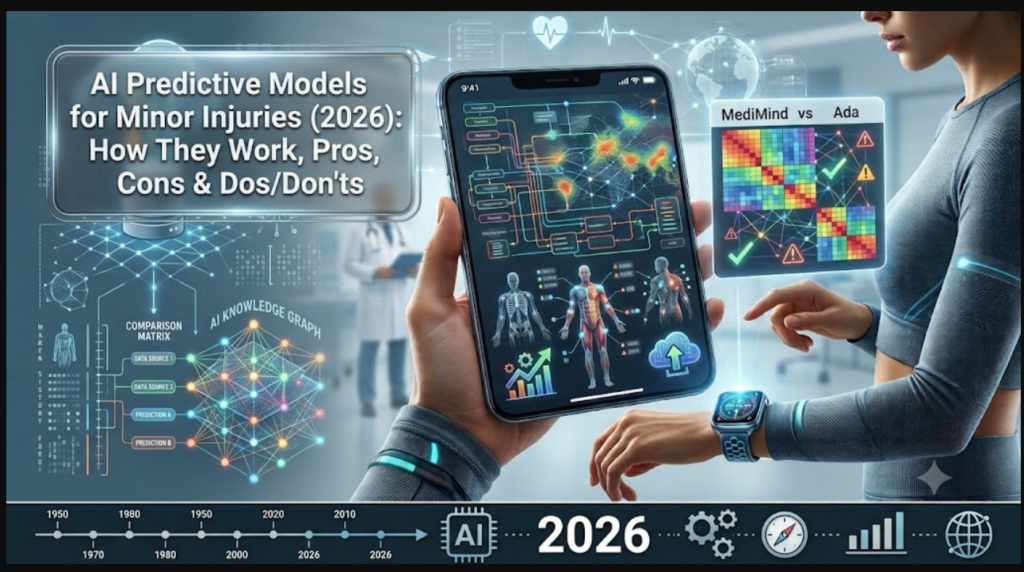
AI Predictive Models for Minor Injuries: Hype vs. Reality
“Predicting an injury before it happens” sounds like something out of science fiction, but it’s become a real, if still maturing, feature of modern wearables and fitness AI. These tools analyze biometric signals — heart rate variability, movement patterns, recovery scores — to flag when your body may be at higher risk of a strain, sprain, or overuse injury.
Here’s a realistic look at what this technology can actually do for everyday users in India, not just elite athletes.
How Injury-Prediction AI Works
These models are trained on large datasets of biometric signals — sleep quality, heart rate variability (HRV), activity load, and recovery trends — captured through a wearable device. When your current data deviates significantly from your personal baseline (say, poor recovery combined with unusually high activity load), the AI flags an elevated injury risk and often suggests reducing intensity or resting.
This is closely tied to the broader wearable-AI research happening in personal health, including large sensor models trained to decode signals like heart rate and activity levels with high accuracy.
Pros of AI Injury-Prediction Tools
| Pros | Why It Matters |
|---|---|
| Personalized baselines | Compares you to your own data, not generic population averages |
| Early overtraining warnings | Can catch fatigue-related risk before it becomes an actual injury |
| Passive data collection | Works in the background via wearables, no manual logging needed |
| Useful for recreational athletes | Not just for professionals — helps casual runners, gym-goers, etc. |
| Encourages recovery habits | Nudges toward rest days and better sleep, which reduce injury risk generally |
Cons of AI Injury-Prediction Tools
| Cons | Why It Matters |
|---|---|
| Predictions are probabilistic, not certain | A “high risk” flag doesn’t guarantee an injury will occur |
| Requires a wearable device | Not accessible to everyone; accuracy also depends on device quality |
| Needs weeks of data for a reliable baseline | Less useful immediately after setup |
| Doesn’t account for biomechanics | Can’t detect issues from poor form or technique directly |
| Can create over-reliance | Users may ignore obvious physical warning signs while trusting the app instead |
Check here for the WHO view on the AI based predictive models.
Dos and Don’ts
Do:
- Wear your device consistently for at least 2–3 weeks before trusting its baseline predictions
- Treat “elevated risk” flags as a prompt to rest or modify intensity, not ignore
- Pair AI insights with basic injury-prevention habits: warm-ups, proper form, hydration
- Sync the tool with a coach or physiotherapist’s guidance if you’re training seriously
Don’t:
- Don’t ignore actual pain or discomfort just because the app shows “low risk”
- Don’t rely on injury prediction as a substitute for proper technique and training guidance
- Don’t expect accurate predictions from a brand-new device with limited data history
- Don’t use these insights to justify pushing through pain — they’re a caution signal, not a green light
Where This Fits Into the Bigger Picture
Injury prediction is one of the more forward-looking categories of AI health tools, sitting alongside symptom checkers, diet planners, and medication trackers as part of a fuller personal health stack. For a complete, India-focused breakdown of the best AI tools for health — including wearable-based tools like this — check out this guide to the best AI tools for health for Indian users.
FAQs
Do I need an expensive wearable for accurate injury prediction? Better sensors generally improve accuracy, but mid-range wearables with HRV and sleep tracking can still provide useful directional insights.
Can AI predict serious injuries, not just minor ones? Most consumer-grade tools are calibrated for overuse and fatigue-related minor injuries, not serious trauma or structural issues, which require clinical evaluation.
How long before an injury-prediction app becomes accurate? Most need at least 2–3 weeks of consistent data to establish a reliable personal baseline.
This article is for informational purposes only and does not constitute medical advice. Consult a doctor or physiotherapist for injury concerns.