
The Chat gpt Revolution: A Complete Guide to Mastering Conversational AI in 2026
In the rapidly shifting digital landscape of 2026, ChatGPT has evolved from a viral novelty into a fundamental utility. It is no longer just a “chatbot”; it is a multimodal operating system for human productivity. Whether you are a student, a software engineer, or a digital marketer, understanding the nuances of OpenAI’s flagship model is the most critical skill of the decade.
This guide explores the current state of ChatGPT, its advanced capabilities, and how you can leverage it to stay ahead in an AI-driven economy while ensuring your content remains Google-friendly.
1. What is Chat gpt in 2026?
ChatGPT, developed by OpenAI, is a Large Language Model (LLM) that utilizes generative pre-trained transformers to understand and generate human-like text. By 2026, the model has moved far beyond the original GPT-3.5 and GPT-4 architectures.
The Shift to Multimodal Intelligence
The modern ChatGPT experience is inherently multimodal. This means the AI can:
- See: Analyze images, screenshots, and live camera feeds to provide real-time feedback.
- Hear: Engage in fluid, low-latency voice conversations that mimic human emotion and tone.
- Create: Generate high-fidelity images via DALL-E and execute complex Python code internally to solve math and data science problems.
2. Why “Google AI-Friendly” Matters
With Google’s Search Generative Experience (SGE) and evolving algorithms, there is a common myth that “Google hates AI content.” This is incorrect. Google’s official stance focuses on content quality rather than the method of production.
To make your ChatGPT-generated content “Google friendly,” you must focus on:
- Information Gain: Does your article provide new insights or just repeat what’s already on the web?
- Human Oversight: Always inject personal anecdotes, case studies, or unique data that an AI wouldn’t know.
- Accuracy: AI can hallucinate. Verifying facts is the “Trust” pillar of E-E-A-T.
3. Core Capabilities of ChatGPT for Professionals
A. Advanced Data Analysis (ADA)
One of the most powerful features in 2026 is the ability to upload massive datasets—be it Excel files, JSON, or SQL exports—and ask ChatGPT to perform regressions, create visualizations, or find hidden trends.
- Use Case: A marketing manager uploads a year’s worth of ad spend data and asks ChatGPT to calculate the Return on Ad Spend (ROAS) per region.
B. Custom GPTs
OpenAI now allows users to build “Custom GPTs”—miniature versions of ChatGPT tailored for specific tasks.
- Example: A “Legal Assistant GPT” trained specifically on your company’s internal compliance documents to answer employee queries instantly.
C. Coding and Software Engineering
For developers, ChatGPT acts as a senior pair programmer. It can debug complex React components, suggest optimizations for SQL queries, and even write boilerplate code for new frameworks.
4. How to Write 2000-Word Articles with ChatGPT (The “Modular” Method)
Asking ChatGPT to “write a 2000-word article” in one go usually results in repetitive, shallow content. To create a high-quality, long-form piece that ranks on Google, use the Modular Method:
Step 1: The Narrative Architecture
Start by asking ChatGPT to generate a comprehensive outline.
Prompt: “I am writing a 2000-word guide on [Topic]. Create a detailed outline with 10 H2 headings and multiple H3 subheadings. Focus on information gain and unique angles.”
Step 2: Section-by-Section Expansion
Input each heading one by one. This allows the AI to dedicate its full “token window” (memory) to that specific section, resulting in much higher detail.
Step 3: The “Human Touch” Layer
After generating the text, manually add:
- Personal Opinions: “In my experience, I found that…”
- Current Events: Reference a news story from this morning.
- Internal Links: Connect the text to other relevant pages on your site.
5. Chat gpt for SEO and Content Marketing
In 2026, SEO is no longer about keyword stuffing; it’s about Semantic Search.
- Keyword Clusters: Ask ChatGPT to group keywords based on user intent (Informational vs. Transactional).
- Schema Markup: Use ChatGPT to generate JSON-LD schema for your articles to help Google understand your content structure.
- Meta Tag Optimization: Generate catchy, high-CTR (Click-Through Rate) titles and meta descriptions that align with the searcher’s “pain points.”
6. The Ethics and Risks of AI Content
While Chat gpt is a force multiplier, it comes with responsibilities.
The Hallucination Problem
Even in 2026, LLMs can occasionally state falsehoods with absolute confidence. Always cross-reference statistical data with authoritative sources like Pew Research or Statista.
Intellectual Property
Be cautious about inputting sensitive company data into ChatGPT unless you are using the Enterprise version, which ensures your data isn’t used for training the global model.
7. Advanced Prompt Engineering Techniques
To get the most out of ChatGPT, you need to move beyond simple questions. Use these three frameworks:
- Chain-of-Thought (CoT): Ask the AI to “think step-by-step” before providing the final answer. This significantly improves reasoning accuracy.
- Few-Shot Prompting: Provide the AI with 2-3 examples of the style or format you want before asking it to generate new content.
- Role Prompting: Start your prompt with “Act as a [Senior SEO Specialist/Quantum Physicist/World-Class Chef].”
8. Comparing ChatGPT to Competitors
While ChatGPT is the leader, the ecosystem is diverse:
- Claude (Anthropic): Known for better “human-like” writing and a larger context window.
- Google Gemini: Better integration with the Google Workspace (Docs, Gmail, Sheets).
- Perplexity: The king of real-time search and citations.
9. Conclusion: The Future of Human-AI Collaboration
As we navigate 2026, the goal isn’t to replace humans with AI, but to augment human creativity with machine efficiency. ChatGPT is the ultimate tool for this transition. By focusing on high-quality prompts, rigorous fact-checking, and SEO best practices, you can create content that not only satisfies Google’s algorithms but truly helps your audience.
The content revolution is here. Are you a passenger or the pilot?
FAQ Section
Q: Is Chat gpt content detectable by Google?
A: Yes, Google has the technology to identify AI-patterns. However, Google does not penalize AI content as long as it is helpful, accurate, and created for users rather than just for search engine rankings.
Q: Can Chat gpt write a full book?
A: Yes, but it requires a chapter-by-chapter approach to maintain narrative consistency and depth.
Q: Is Chat gpt free in 2026?
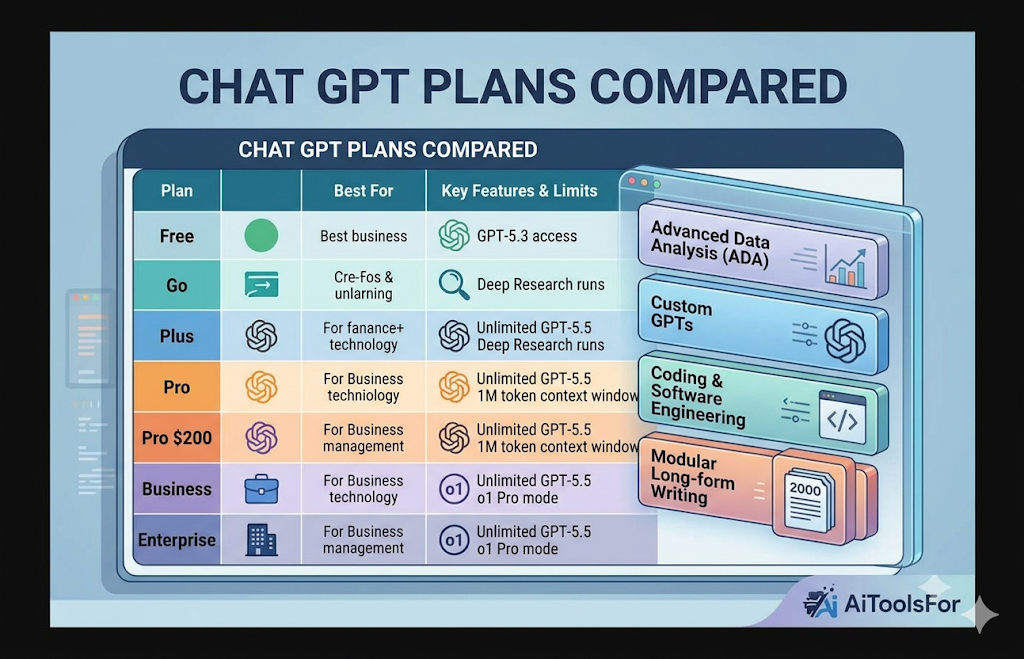
A: OpenAI typically offers a “Free” tier with limited access to the latest models and a “Plus” subscription for power users who need high-speed, multimodal features.
Based on the content of your post, here are 9 additional FAQ questions designed to be high-value, “Google-friendly,” and aligned with the professional, forward-looking tone of your 2026 guide.
Q: What is the “Context Window” and why does it matter for long-form writing?
A: The context window refers to the amount of text (tokens) ChatGPT can “remember” during a single conversation. In 2026, larger context windows allow you to upload entire books or complex codebases, ensuring the AI maintains consistency without forgetting the beginning of the prompt.
Q: Can ChatGPT access the internet in real-time?
A: Yes. Through integrated browsing capabilities, ChatGPT can search the live web to provide up-to-date news, stock prices, and recent research papers, citing its sources to help mitigate hallucinations.
Q: How do I prevent ChatGPT from using my data to train its models?
A: Users can opt-out of data training by adjusting their privacy settings or using “Temporary Chats.” For businesses, using the Enterprise or Team versions ensures that all data remains private and is never used for global model training.
Q: What is the difference between a prompt and a “System Instruction”?
A: A prompt is the immediate task you give the AI, while a System Instruction (or Custom Instruction) provides a permanent set of rules—such as “always write in a professional tone” or “keep responses under 200 words”—that apply to every conversation.
Q: Can ChatGPT generate functional code for mobile apps?
A: Absolutely. It can write boilerplate and logic for languages like Swift, Kotlin, and React Native. However, developers should use it as a “Copilot” to accelerate workflow rather than a “pilot” that writes unverified production code.
Q: How does ChatGPT handle mathematical and logical reasoning in 2026?
A: Through internal code execution (Python) and advanced reasoning chains, ChatGPT has moved beyond “predicting the next word” to actually solving equations and logical puzzles with high precision.
Q: What is “Prompt Injection” and is it a security risk?
A: Prompt injection is a technique where a user tries to bypass the AI’s safety filters via clever phrasing. OpenAI constantly updates its “red-teaming” protocols to defend against these attempts and ensure ethical output.
Q: Can I use ChatGPT to create a voice for my brand?
A: Yes, by using the multimodal voice features and Custom GPTs, you can define a specific personality, tone, and vocabulary that aligns with your brand identity for customer-facing interactions.
Q: Will AI-generated content affect my website’s E-E-A-T score?
A: AI content itself doesn’t lower your score, but a lack of Experience and Authoritativeness does. To protect your E-E-A-T, ensure your articles include unique human perspectives and verifiable facts that an AI cannot generate on its own.
Internal links
- Ai tools for instgram.
- Ai tools for students.
- Ai tools for business productivity.
- Ai tools for youtube creators.
- Ai tools for travel planners.
- Ai tools for health and fitness.
- Ai tools for finance and and budgetting.
External links
One thought on “Chat Gpt”